
 Image 1 of 1
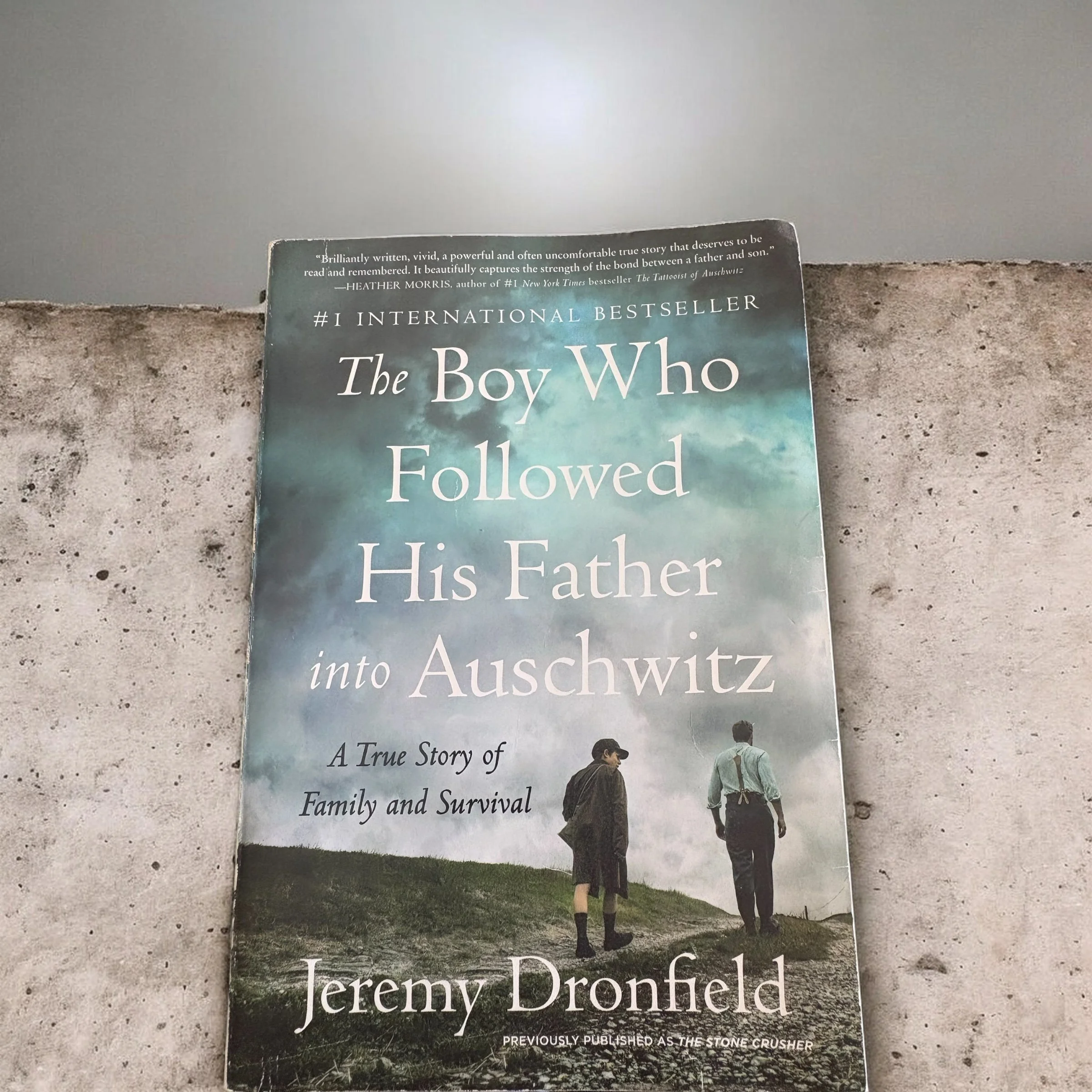
Jeremy Dronfield’s The Boy Who Followed His Father into Auschwitz is a meticulously researched, heart-wrenching account that traces one family’s descent into the machinery of the Holocaust through the eyes of a single, stubbornly loving father and his young son. With restrained but powerful prose, Dronfield reconstructs the lives of Willem and Peter, weaving archival material, survivor testimony, and historical context into a narrative that is both intimate and panoramic. The book captures the slow unspooling of normalcy—work, home, small joys—into the brutal calculus of Nazi persecution, and it renders the father’s refusal to abandon his child as an act of devotion that stands in stark contrast to the surrounding inhumanity.
Jeremy Dronfield’s The Boy Who Followed His Father into Auschwitz is a meticulously researched, heart-wrenching account that traces one family’s descent into the machinery of the Holocaust through the eyes of a single, stubbornly loving father and his young son. With restrained but powerful prose, Dronfield reconstructs the lives of Willem and Peter, weaving archival material, survivor testimony, and historical context into a narrative that is both intimate and panoramic. The book captures the slow unspooling of normalcy—work, home, small joys—into the brutal calculus of Nazi persecution, and it renders the father’s refusal to abandon his child as an act of devotion that stands in stark contrast to the surrounding inhumanity.